logo logo
giving banner
Donate
    • Membership
    • Donate
  • Social Justice
    • Racial Justice
    • Climate Justice
    • Disability Justice
    • Economic Justice
    • Food Justice
    • Health Justice
    • Immigration
    • LGBTQ+
  • Civic News
  • Nonprofit Leadership
    • Board Governance
    • Equity-Centered Management
    • Finances
    • Fundraising
    • Human Resources
    • Organizational Culture
    • Philanthropy
    • Power Dynamics
    • Strategic Planning
    • Technology
  • Columns
    • Ask Rhea!
    • Ask a Nonprofit Expert
    • Economy Remix
    • Gathering in Support of Democracy
    • Humans of Nonprofits
    • The Impact Algorithm
    • Living the Question
    • Nonprofit Hiring Trends & Tactics
    • Notes from the Frontlines
    • Parables of Earth
    • Re-imagining Philanthropy
    • State of the Movements
    • We Stood Up
    • The Unexpected Value of Volunteers
  • CONTENT TYPES
  • Leading Edge Membership
  • Newsletters
  • Webinars

Abandoned Churches and Nonprofits = Creative Reuse

Eileen Cunniffe
June 28, 2013

LDS

June 26, 2013; Deseret News

A creative partnership between two Salt Lake City nonprofits—Salt Lake Valley Habitat for Humanity and the American Cancer Society (ACS), Intermountain Region—combined with the generous donation of an abandoned church and the 2.2-acre lot it sits on will yield long-term benefits for cancer patients from the western United States as well as for low-income families in and around Salt Lake City.

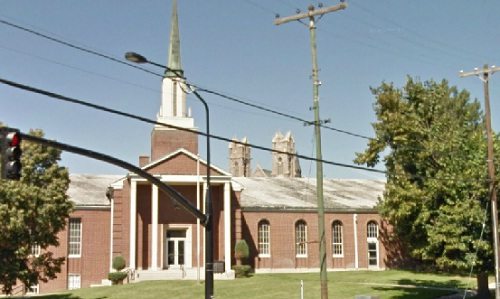
A 16,000-square-foot Church of Jesus Christ of Latter-day Saints meetinghouse, built in 1951, has been abandoned for six years since the congregants moved to another chapel. The LDS Church has donated the $4.2 million property to ACS. The ACS plans to build a Hope Lodge on the site, which will provide temporary housing for cancer patients who come to Salt Lake City for treatment, along with their caregivers. ACS has 31 Hope Lodges around the country, but this will be the first to serve the Intermountain West. Its 42 suites will accommodate more than 800 patients each year, and the ACS, Intermountain Region will relocate its offices to the new building, which is expected to open in the spring of 2015.

So where does Habitat for Humanity fit into this picture? Before the church is razed, Habitat will oversee a “harvest” of salvageable materials from the building, which will then be used in Habitat projects—either in the construction of new homes for low-income families, or in the local Habitat thrift store, whose proceeds benefit Habitat projects. Carpeting, bathroom and light fixtures, doors, cabinets and wood moldings will be salvaged throughout the summer by teams of volunteers from local businesses, overseen by Habitat staff. This week, a team of 50 volunteers from O.C. Tanner, a company that specializes in employee-recognition strategies, spent a day harvesting reusable building materials; the Salt Lake City­based firm has also made a $1 million contribution to the Hope Lodge project.

Sign up for our free newsletters

Subscribe to NPQ's newsletters to have our top stories delivered directly to your inbox.

By signing up, you agree to our privacy policy and terms of use, and to receive messages from NPQ and our partners.

In a nod to the history of the site, some of the maple flooring beneath the carpet will be used in the Hope Lodge construction. Habitat could not find a buyer for the copper steeple, so that will be melted down and sold.

It’s hard to keep track of all the “boxes” that can be checked off on this project—from cross-sector collaboration to creative reuse, from health care to low-income housing, from corporate philanthropy to economic development. Not to mention the benefits to the surrounding community of replacing a deteriorating structure with a welcoming shelter.

While in this case the original church is being razed, there’s a movement afoot to preserve church properties that are no longer being used at all or to full capacity by housing other kinds of organizations within the buildings, including nonprofit social services and performing arts groups. The non-denominational Partners for Sacred Places is at the forefront of this work. Partners has regional offices in three states—Pennsylvania, Illinois and Texas—but has worked with denominations in all 50 states as an “advocate for the sound stewardship and active community use of America’s older religious properties.”

With the increasing number of church properties experiencing shrinking or disappearing congregations—especially in urban areas—opportunities for creative collaborations like the one in Salt Lake City may abound.—Eileen Cunniffe


Our Voices Are Our Power.

Journalism, nonprofits, and multiracial democracy are under attack. At NPQ, we fight back by sharing stories and essential insights from nonprofit leaders and workers—and we pay every contributor.

Can you help us protect nonprofit voices?

Your support keeps truth alive when it matters most.
Every single dollar makes a difference.

Donate now
logo logo logo logo logo
About the author
Eileen Cunniffe

Eileen Cunniffe has worked in the nonprofit arts sector for more than a decade, managing board development, capacity-building consulting projects and skill-based volunteer programs. She also has deep experience in corporate public affairs, organizational communications and community relations work. In addition to writing for NPQ, Eileen also writes and publishes creative nonfiction.

More about: Community OrganizingNonprofit NewsPhilanthropyReligious / Faith-Based
See comments

You might also like
A National Network of Activists Pursuing “People’s Budgets” Gains Prominence
Celina Su
How People’s Budgets Advance Local Democracy: A Conversation with Celina Su
Steve Dubb and Celina Su
The Power of Direct Community Funding
Ana Valéria Araújo
Equitable Intermediaries: Power, Protection, Partnership
Frank Gargione and Andrea Granda
GivingTuesday: Mobilizing Grassroots Donors
Isaiah Thompson
Four Ways Philanthropy Can Support the Movement for a Third Reconstruction
Richard Besser and Carmen Rojas

Upcoming Webinars

Group Created with Sketch.
January 29th, 2:00 pm ET

Participatory Decision-making

When & How to Apply Inclusive Decision-making Methods

Register
Group Created with Sketch.
February 26th, 2:00 pm ET

Understanding Reduction in Force (RIF) Law

Clear Guidance for Values-centered Nonprofits

Register

    
You might also like
Budget Justice: On Building Grassroots Politics and Solidarities
A National Network of Activists Pursuing “People’s...
Celina Su
Budget Justice: On Building Grassroots Politics and Solidarities
How People’s Budgets Advance Local Democracy: A...
Steve Dubb and Celina Su
A afro-Brazilian man waving a Brazilian flag joyfully, symbolizing the positive effect that direct funding can have on communities.
The Power of Direct Community Funding
Ana Valéria Araújo

Like what you see?

Subscribe to the NPQ newsletter to have our top stories delivered directly to your inbox.

See our newsletters

By signing up, you agree to our privacy policy and terms of use, and to receive messages from NPQ and our partners.

  • About
  • Advertise
  • Careers
  • Contact
  • Copyright
  • Donate
  • Editorial Policy
  • Funders
  • Submissions

We are using cookies to give you the best experience on our website.


Nonprofit Quarterly | Civic News. Empowering Nonprofits. Advancing Justice.
Powered by  GDPR Cookie Compliance
Privacy Overview

This website uses cookies so that we can provide you with the best user experience possible. Cookie information is stored in your browser and performs functions such as recognising you when you return to our website and helping our team to understand which sections of the website you find most interesting and useful.

Strictly Necessary Cookies

Strictly Necessary Cookie should be enabled at all times so that we can save your preferences for cookie settings.